By Rhea Ramachandran, Emmy Shi, Lupin Cai, and Ruilin Chen
Introduction:
“Imagination is the eye of the soul.” — Joseph Joubert
Could you imagine if you cannot imagine?
Imagination is the most common and powerful tool for people to employ for creating our current life and future; modern technologies, contemporary arts, and flexible lifestyles are all rooted in basic imagination. However, what would happen when we lose our ability to imagine?
Aphantasia is the inability to create mental imagery. In other words, people who have Aphantasia are unable to create any visual mental image, not even the most familiar scenes, objects, or routes. Psychologists sometimes they would refer to Aphantasia as “mind-blindness,” meaning people cannot create visual imagery or hear their inner voice voluntarily.
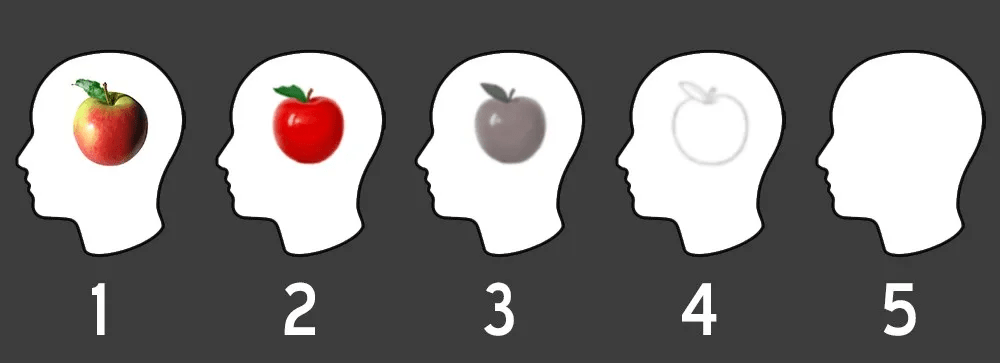
Design Goal:
According to our research through a large volume of neuroscience research findings (Keogh, 2017) and people’s inquiries on the Internet on people who have Aphantasia, we found that Aphantasia is not an isolated psychological case, but a lot of people have undergone this condition. In addition, we found that a large number of people with Aphantasia have one aspiring goal: they want to experience what imagination is like. Therefore, our goal is to employ VR technology to help people who have Aphantasia experience imagination; we aim to help them earn the feeling of creating mental visual imagery.
Design Process:
Sheet 1: brainstorm
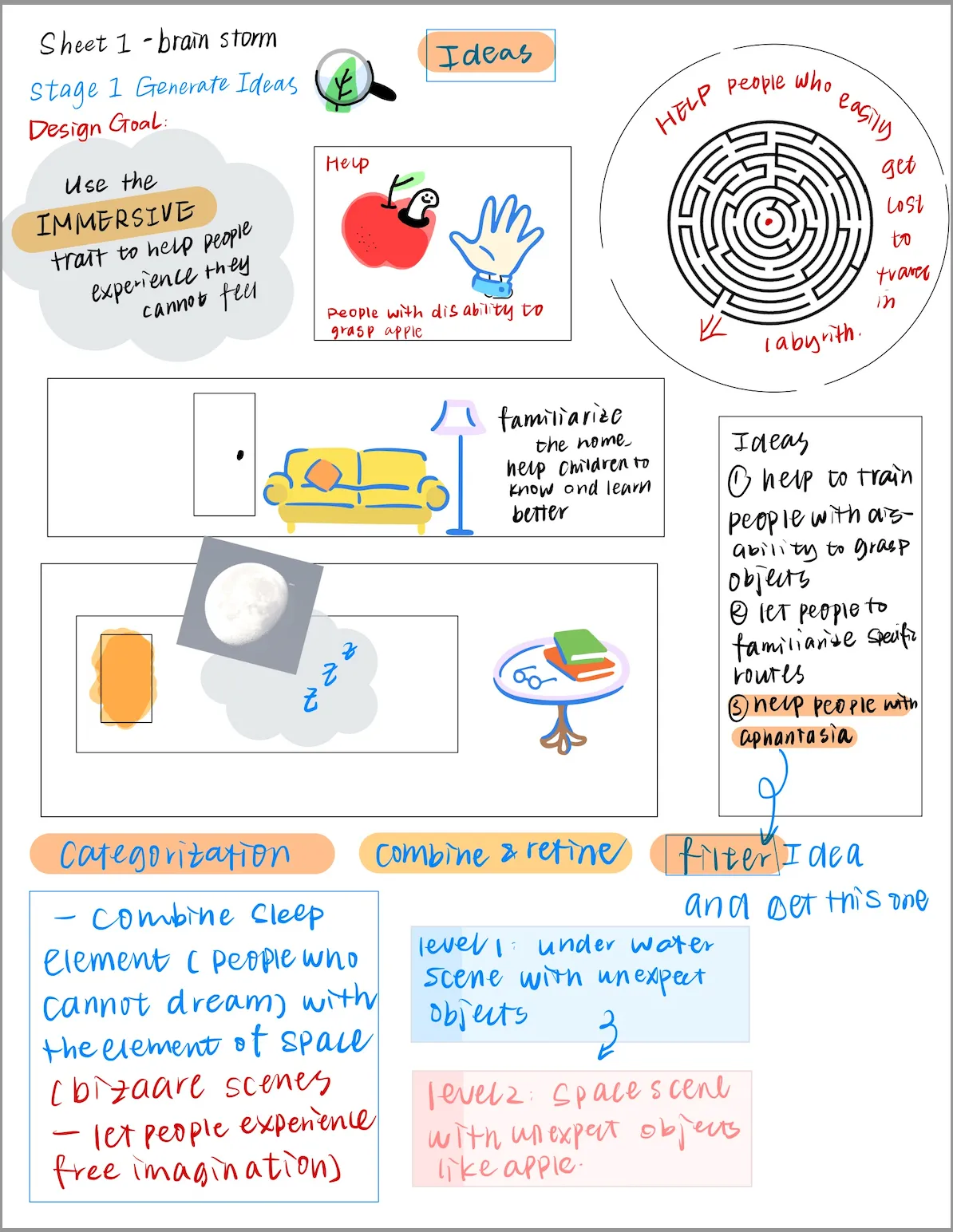
In the brainstorming stage, we follow the steps of the design sheet to employ a top-down narrative to find our design goal and specific design plans. First, we found that one of the most compelling traits of VR is that it can provide an immersive experience for the users; therefore, we decided to employ this trait to help the users experience what they cannot feel in reality or in their normal lives. Inspired by this goal, we generated a lot of ideas from different perspectives: we intended to create a scene to help people with specific disabilities with fine motor skills learn how to grasp an apple; we wanted to create a scene to help people learn specific routes to prevent them from getting lost, etc. In the later filter idea stage, we compared the feasibility among different ideas and found some ideas were too hard to apply, such as the “grasp object” idea since it would require more medical knowledge during this design; instead, we stumbled on the idea that a lot of people aspire to experience how to imagine while VR is one of the best technologies for providing space for imagination. Therefore, we decided to employ the idea of helping people with Aphantasia experience what dreams and imaginations are like. In the next stages of categorization and refinement, we combine a lot of previous ideas to support our design. To be specific, we decided to set two levels of scenes for people to experience: one level is an underwater scene, and we decided to integrate the previous idea of the labyrinth into this scene to create a more dream-like scene; the other level is an outer space scene, so we decided to put assorted unexpected objects (like apples, inspired by our previous ideas) in the space as celestial bodies to create bizarre imaginations that would not appear in real life.
Sheet 2–4: Initial design:
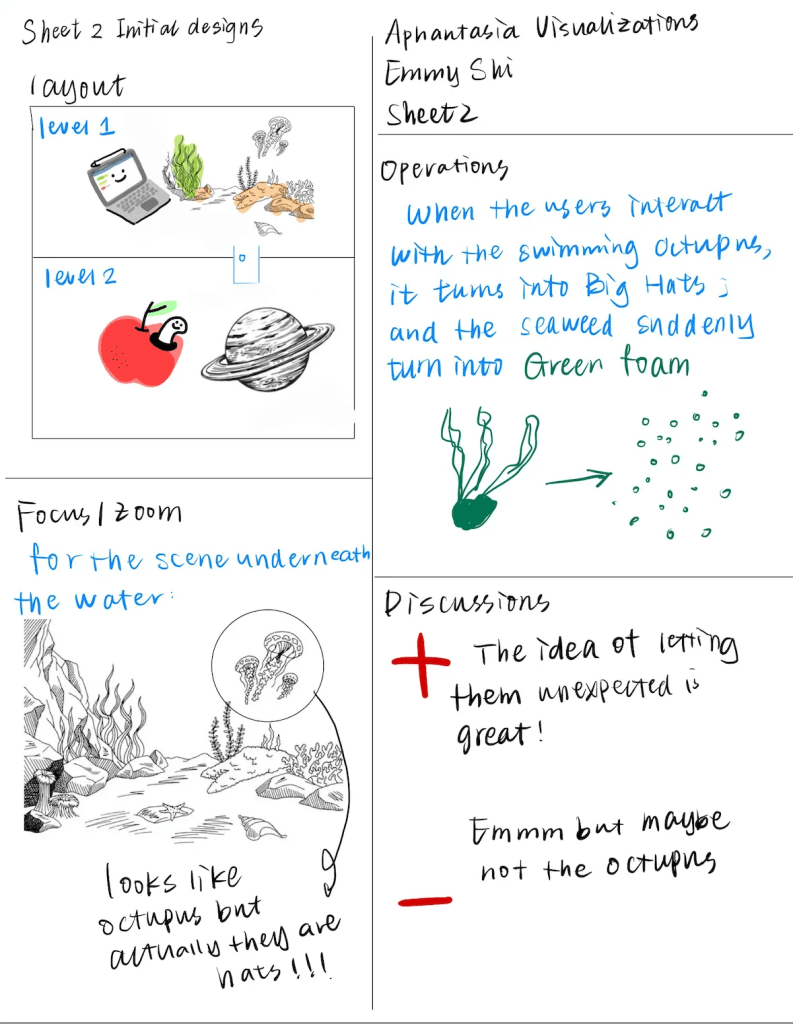
In Sheet 2, we have our initial designs for our two levels of scenes, with a greater emphasis on the design of Level 1. We decide on the general layout to be level 1 as an underwater scene and level 2 as an outer space scene. The reason we chose these two scenes is because these two scenarios do not commonly appear in normal life but are widely mentioned in our imaginations, and we decided to employ a door as a note to connect these two levels. Later, in the stage of focus and zoom in our design, we intend to add more unexpected elements to the underwater scene. To be specific, we create an underwater scene with kelps, rocks, and swimming octopi; when the users interact with the octopi, they suddenly change into big hats. However, in the discussion session, we realized that although the idea of bringing more unexpected objects into this scene would be fantastic for people to experience imagination, turning swimming or moving objects into static objects would be really complex to achieve. Therefore, we decided to focus more on creating specific interactive objects.
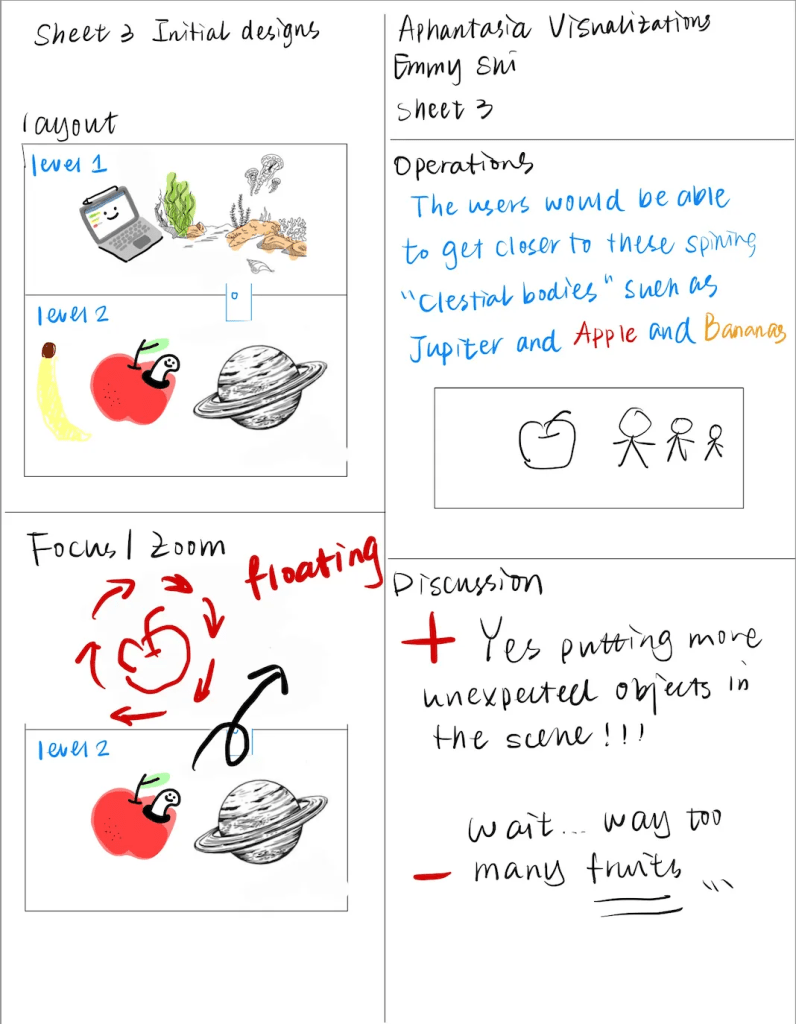
In design sheet 3, we emphasize creating the layout for level 2, which is the outer space level. At this level, we decide to create a world with a lot of moving celestial bodies, some of which are unexpected or bizarre objects such as apples and bananas. The users would interact with these objects by moving closer or farther from them, thus giving them the experience of roaming in outer space. In the discussion section, we think the advantage of this setting is that it will create more immersive and dream-like scenarios for the users, and the disadvantage is that the unexpected objects are all from the same category (fruits), so we need to put more diversified elements in this scene.
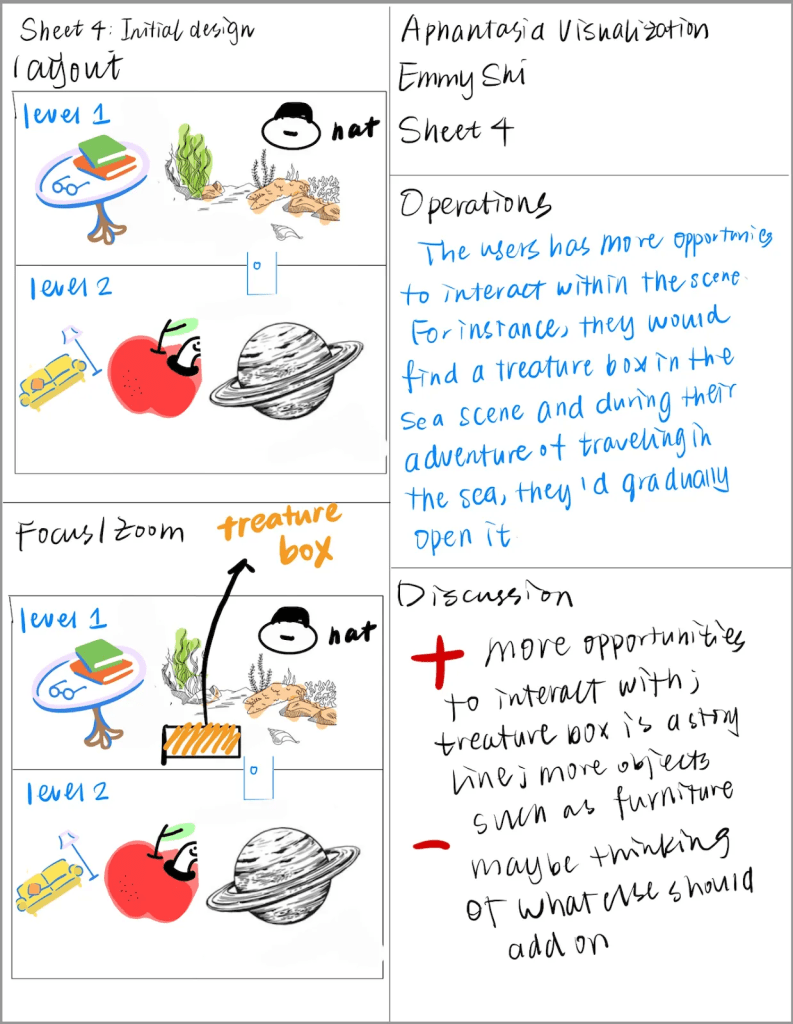
In design sheet 4, we decide to combine our advantages from the previous two design sheets and create a medium-fidelity design. Continuing to build on the previous advantage of putting creative and unexpected elements in the scene, we decide to put more unexpected objects, such as a pile of books and huge hats, in the underwater scene while adding some spinning furniture as one of the celestial bodies in the outer space scene. In the meantime, we address our previous advantages: we replace more feasible objects to interact with users, and we add more interactive tasks, such as enabling the users to gradually open a treasure box during their adventure of experiencing novel underwater and outer space scenes.
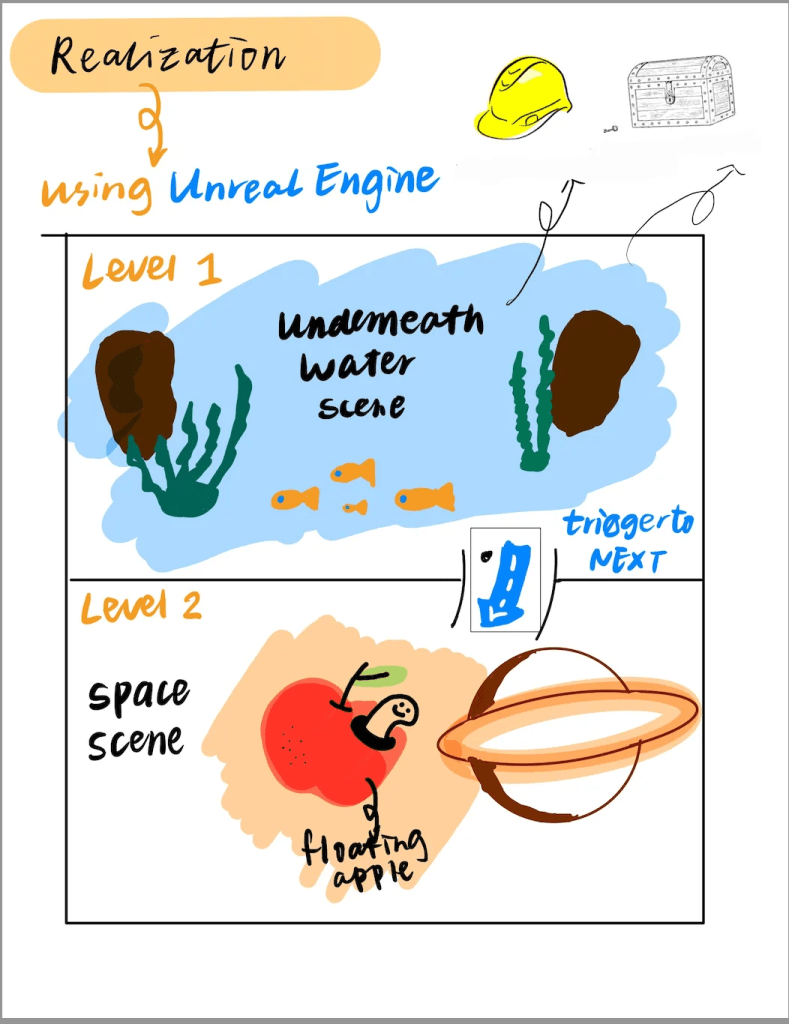
In design sheet 5, we have our realization design. In this design, we combine all our previous designs for these two levels and specify the elements we are mainly going to emphasize in the design, such as the treasure box and hat. In addition, we create a door as a transition point for the user to trigger to enter the next level. Next, we transform our paper prototype into a VR experience.
Level 1- Under the Sea:
First, we create a menu panel for users to easily start, exit, and adjust their needs through the option button in the VR experience. Upon entering the scene, the users would reach the first underwater (sea) level. Considering the aim of this game is to help users with Aphantasia experience free imagination instead of overwhelming them, we designed a panel that allows the user to stop and adjust their pace readily by pressing the button P, so they can resume and quit the game anytime.
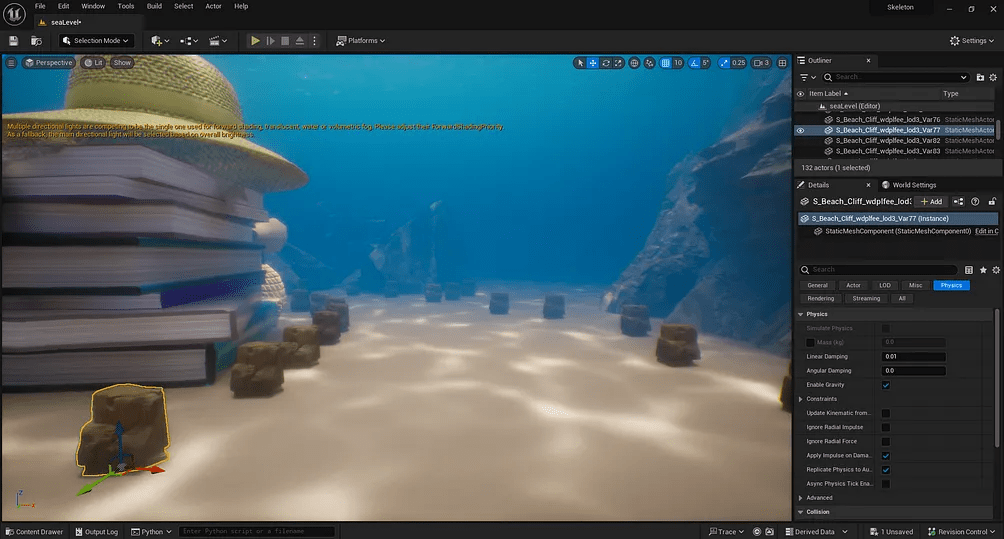
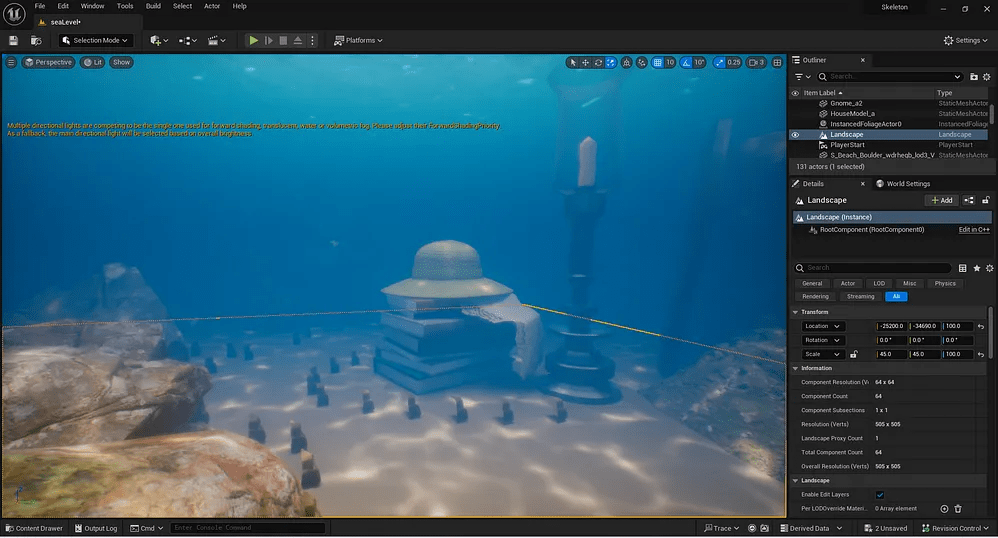
Starting to roam around the underwater scene, the users would experience imagined visual imagery through two tasks. First, they are welcome to travel around the scene and collect specific objects from the treasure box into their inventory (they can access their inventory by pressing button I). During this process, they would see a lot of unexpected and bizarre elements and objects during their adventure; this design aims to help them experience the freedom and power of imagination. For instance, they would see a huge pile of books near the rocks, and they would encounter a giant toy plane and a huge yellow hat in the corner with fish swimming around. In addition, they would find unexpected objects, such as small toy planes, in the treasure box. The second task is to let the users find a hint during their adventure of collecting the objects inside the box in order to get the code for opening the transitioning door to the next outer space level. To be specific, there is a four-digit code the users need to find to open the door; during the process of collecting objects, they would find a hint near the treasure box. If they find three toy planes inside the treasure box and there are two cubes beside the treasure box, that means the second digit of this code is 3. The design mindset behind this is an attempt to help the users learn how to imagine through these interactive, dream-like tasks. Although current research shows that according to the biological structure of people who have Aphantasia, it would be extremely hard for them to learn how to visualize mental imagery, we still aspire to make an attempt to help them experience what imagination is like to learn how to imagine by providing them with more interactive and immersive problem-solving tasks in such a scene, thus exploring the possibilities of curing Aphantasia.
Level 2- Outer Space:
For this level, once the users enter the door and dive into outer space, they will experience a universe full of spinning celestial objects. Some celestial objects are normal, such as Jupiter and other planets, while others are bizarre, such as spinning chairs and rotating boxes. The users can then interact with the scene by getting closer or farther from these objects and observing them; they can also pause the scene readily to have an even more meticulous look. The design mindset behind this is based on our observations of imaginations and dreams. In a lot of people’s imagined scenes or dreams, they can zoom in on the scene and take meticulous observation of bizarre details very readily. The reason we design such interactive scenes is to let the users experience a more profound perspective of what it is like to have an imagination.
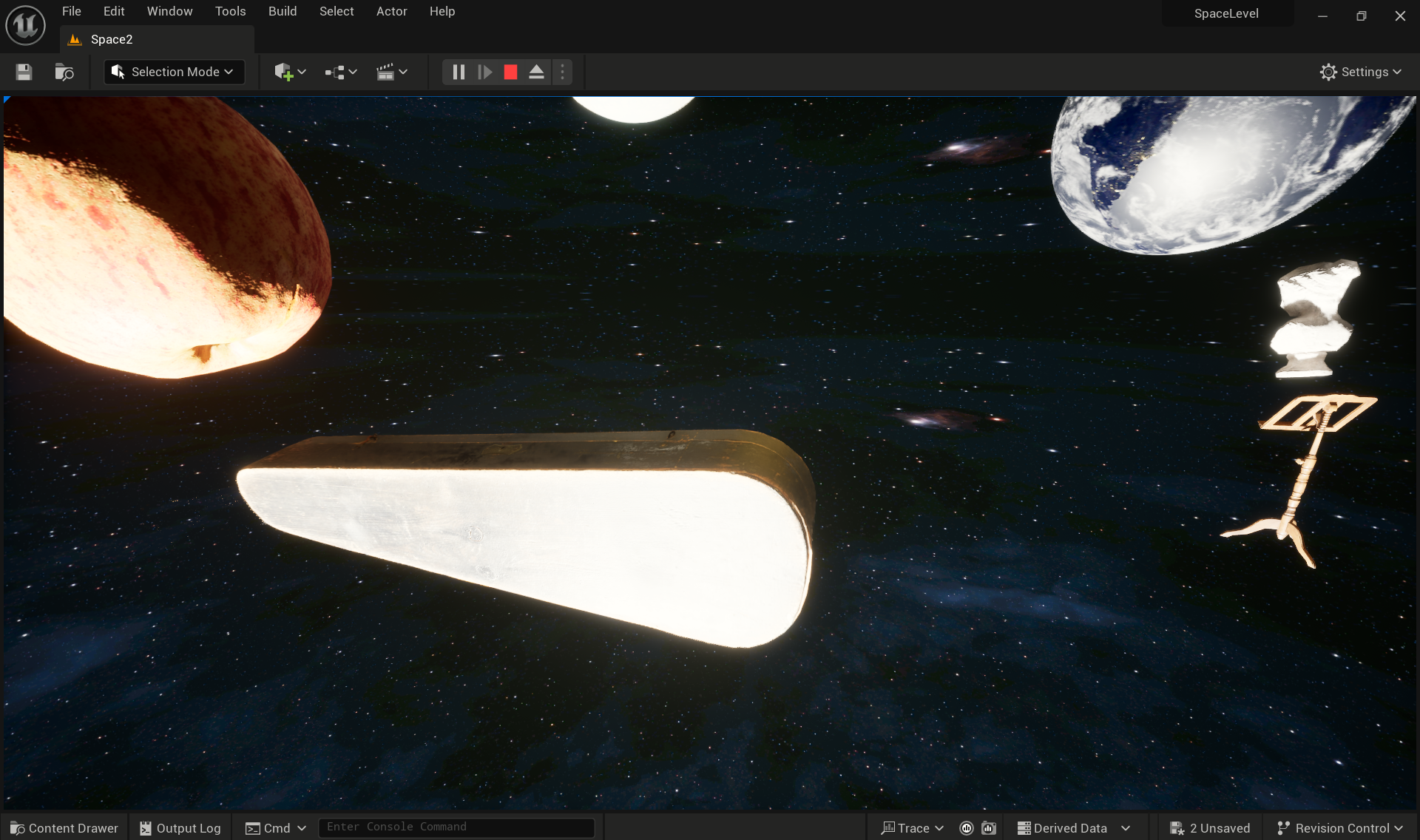
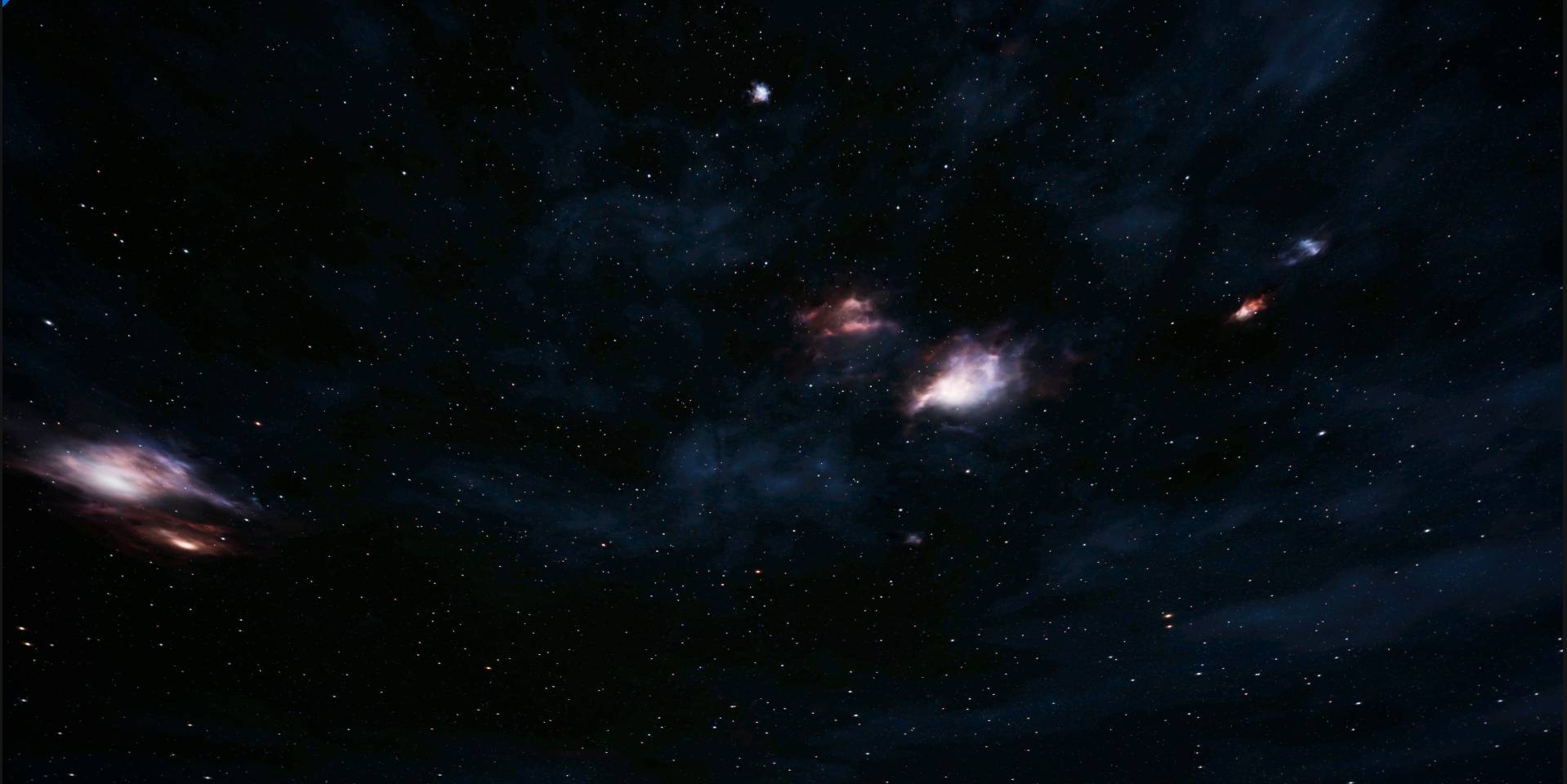
Note: We were unable to host our VR because it can only run on the Unreal engine. Thus, we have included the following Google Drive with the files for our VR experience. If you would like to view this experience, you can run these files in the Unreal Engine.
https://drive.google.com/file/d/1XGcsVSRV1PU2_WULhYCgRvCDdJCsUsFt/view?usp=sharing
Obstacles:
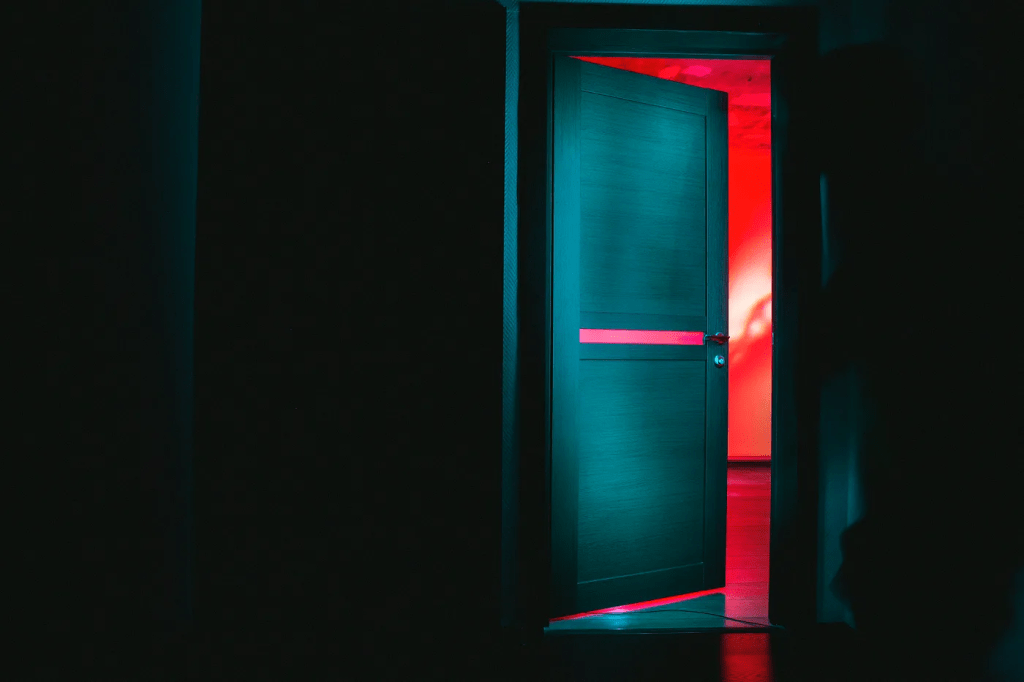
Apart from the obstacles we mentioned above in the 5-sheet design processes, we countered other technical and idea-related obstacles. When we designed level 1, the biggest problem we encountered was how to create interactive tasks that allowed people to roam around the scene while also solving a problem during this process. At first, we intend to create a bunch of boxes that pile up together, and the users can move them away; however, the users would only need to stay in at a specific point to finish this task. In that way, they do not have a chance to interact with the assorted unexpected objects in the scene. Therefore, inspired by our initial ideas of a labyrinth during the brain-storming processes, we decided to design 10 boxes and put them in assorted corners for the users to find and solve the puzzle gradually. The second problem we encountered was that we did not know how to transition smoothly from one level to another; we were thinking of a lot of different ideas, such as falling into space. However, the technical issue is that we cannot make sure that this is the right place for the users to fall to the next level. Therefore, we decide to employ a door to connect these two levels for the users to solve the code and enter the next level of the scene.
Testing:
In order to test throughout our design process, we asked a variety of individuals to give us feedback on each iteration of our paper prototypes. We could not find individuals who have Aphantasia, so in order to mimic testing for users with this need, we asked our peers for feedback on their most vivid dreams. Many of our users indicated that an underwater and outer space scene would be an interesting setting for vivid imagery. This is due to the fact that many people don’t get to see these settings in real life. Thus, these scenes typically come to life in our user’s dreams, where they can use their imagination to think about their vivid imagery. Based on our sketches, they gave us feedback on how to make these scenes as imaginative as possible. By adding random objects such as apples, furniture, and plastic dwarfs to our scenes we were able to create scenes that satisfied user’s imaginations. After constructing our final VR, we again asked a new group of users to demo our project and ask for their input. The final iteration of testing consisted of the following input from our users:
- Add an interactive component to the scene
- Make the scenes more dynamic rather than static
- Add more random objects to the scenes to make it as imaginative as possible
- Add sound to the scenes

Based on this feedback, we implemented interaction in the last iteration of our design by adding treasure chests underwater where users must open the chests to reveal the code that takes them to the space level. We made the scenes more dynamic by adding fish to swim under the water as well as rotating planets/objects in the space scene. We also added more random objects to all of the scenes in addition to suns mimicking water and outer space. These final updates adhered to user feedback and allowed us to implement our final design to employ VR to provide an immersive visual experience for people with Aphantasia. If we had more time to implement this project, future goals would be to gather feedback from people with Aphantasia and design additional scenes to help them explore their imaginations as much as possible.
Limitations:
- Although employing Unreal Engine would allow us to create more sophisticated scenes that allow people to have a more immersive experience, it creates some difficulty for some users who do not have software to access and interact with.
- We might need to create more interactive tasks in the outer space scene for the users to interact with and problems for them to tackle, thus elevating the opportunities for them to immerse themselves in and learn how to imagine.
Conclusion:
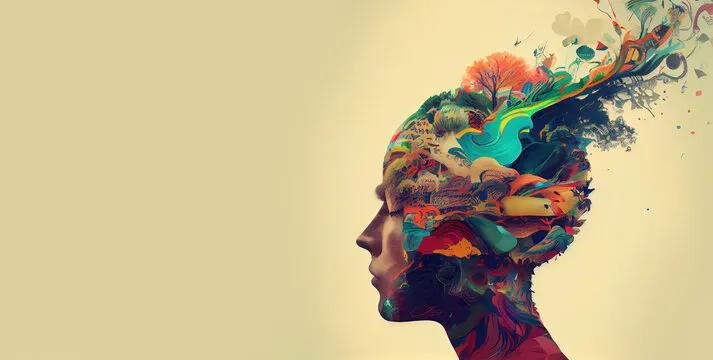
Our project not only shines a light on the shadowed corners of the human experience but also serves as a reminder of technology’s ability to bridge gaps in human perception. By designing and refining virtual reality scenarios that range from the depths of the ocean to the vastness of outer space, we have embarked on a groundbreaking journey to unlock the world of imagination for those who have never experienced it. This endeavor not only expands the horizons of what is possible with VR technology but also opens up a new realm of experiences for individuals with Aphantasia, offering them a unique glimpse into the possibilities of human imagination. As we continue to explore and enhance these immersive environments, the potential to enrich the lives of many more individuals continues to expand. This project, therefore, is not just about creating vivid scenes; it’s about unlocking the innate human capacity for wonder, creativity, and exploration, making the invisible visible for those who dream of seeing the world through the eyes of their imagination.
 Emmy Shi
留下评论